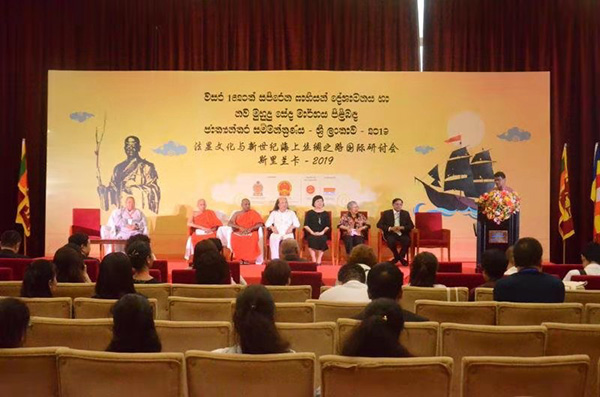
Fa Xian
Introduction
Fa Xian, a revered figure in the history of Buddhism, was a Buddhist monk from China who lived during the fourth century, at the time of the Eastern Jin Dynasty (317-420). He is best known for his pilgrimage journey to India, which was driven by a profound desire to visit the sacred sites of the Buddha's life and procure Buddhist texts that were yet to be introduced to China. His travels are chronicled in his work, "A Record of Buddhist Kingdoms", which provides valuable insights into the cultural and religious landscapes of ancient India and Sri Lanka, as well as the Buddhist practices he encountered.
Early Life
Fa Xian was born during an era when Buddhism was experiencing significant imperial favor in China, a period marked by the thriving of Buddhist practices and the construction of numerous temples. This favorable environment may have influenced Fa Xian's early inclination towards Buddhism and his eventual decision to become a monk. Details about his early life are sparse, but his commitment to the monastic life and his intense devotion to the Dharma are evident from his later undertakings.
Journey to India
Motivation and Preparation
Fa Xian's journey to India was primarily motivated by his desire to collect Buddhist scriptures that were not available in China. At that time, many of the core texts of Buddhism were either incomplete or entirely missing in his homeland. The allure of obtaining these scriptures and the opportunity to witness the places associated with the life of the Buddha fueled his determination. Preparing for such a monumental journey required not only spiritual readiness but also considerable physical and mental preparation, given the perilous routes and the uncertainties of travel in the ancient world.
Route Taken
Fa Xian embarked on his pilgrimage around 399, traveling through regions that are now parts of Afghanistan, Pakistan, and India. His route included traversing the treacherous terrain of the Taklamakan Desert and the high passes of the Pamir Mountains. He spent several years in India, visiting key Buddhist sites such as Lumbini, Bodh Gaya, Sarnath, and Kushinagar. His journey also took him to Sri Lanka, where he spent two years studying and documenting Buddhist practices.
Monastic Life in India
Studies and Experiences
During his time in India, Fa Xian immersed himself in the study of Buddhist texts and practices. He visited renowned monastic universities like Nalanda and engaged with learned monks, absorbing advanced Buddhist teachings. His experiences in India enriched his understanding of Buddhism and inspired him to preserve and transmit the knowledge he gained back to China.
Influential Figures
Throughout his travels, Fa Xian encountered numerous influential Buddhist monks and scholars who played pivotal roles in enhancing his religious education. These interactions not only deepened his spiritual insights but also helped him acquire a substantial collection of sacred texts, which included key sutras and commentaries previously unknown in China.
Contributions to Buddhism
Writings and Translations
Fa Xian's seminal work, "A Record of Buddhist Kingdoms", serves as a historical document that provides detailed descriptions of the regions he visited, their customs, and the state of Buddhism during his travels. This work was instrumental in introducing Indian Buddhist practices to China and furthering the understanding of Buddhism's spread across Asia. His translations of several Buddhist texts into Chinese significantly enriched the Chinese Buddhist canon, making profound teachings accessible to a broader audience.
Influence on Buddhist Thought
Fa Xian's contributions went beyond mere translations; they had a lasting impact on Buddhist thought in China. His efforts helped shape a more comprehensive understanding of Buddhism, integrating Indian traditions and philosophies into Chinese monastic practices. His work laid the foundation for future generations of monks and scholars who continued to explore and expand upon his insights.
Return to China
Journey Back
Fa Xian chose a different route for his return journey to China, opting for the maritime path via Sri Lanka and then sailing through the Indian Ocean. This decision introduced him to additional cultural and religious contexts, particularly in Sri Lanka, where Buddhism was flourishing. The return voyage was fraught with challenges, including shipwrecks and adverse weather, but his determination ensured that the precious texts he carried were preserved.
Reception and Legacy
Upon his return to China, Fa Xian was received with great respect and admiration. The Buddhist texts and knowledge he brought back were invaluable to the Chinese Buddhist community. His legacy is marked by the profound influence he had on the spread and understanding of Buddhism in China, as well as his contributions to cultural exchange between China and India.
Historical Impact
Influence on Cultural Exchange
Fa Xian's journey is a testament to the enduring cultural exchange between China and India. His travels facilitated the flow of religious and cultural knowledge, enriching both regions. The texts he brought back played a significant role in shaping the religious landscape of East Asia and fostering a deeper connection between diverse Buddhist traditions.
Legacy in Historical Records
Fa Xian's accounts remain a critical historical source for understanding the early interactions between China and the broader Buddhist world. His meticulous observations provide scholars with invaluable insights into ancient societies, their religious practices, and the dynamics of cultural exchange during his era.








